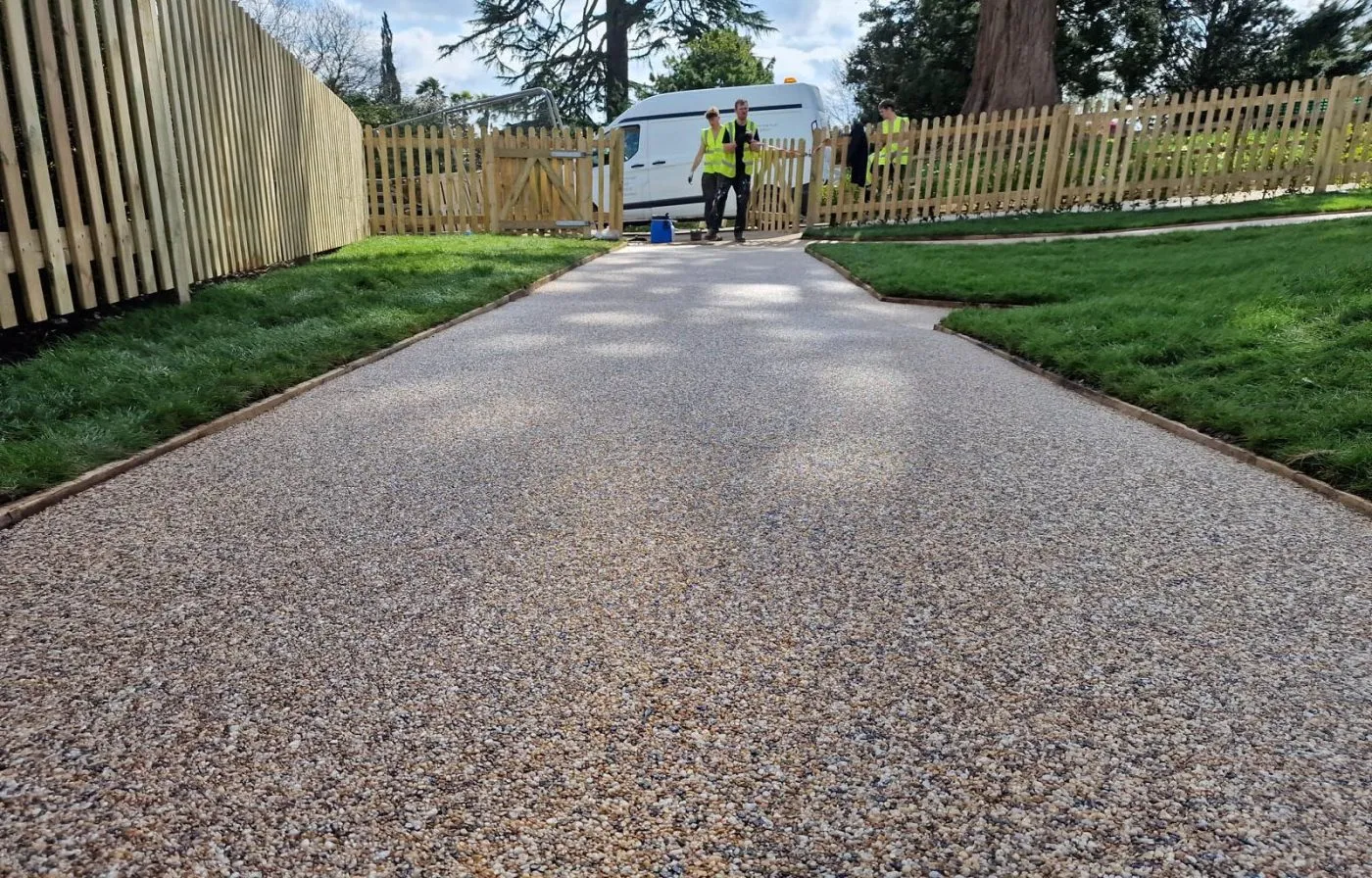
What is resin bound paving?
Resin bound paving is a surface made from natural stone aggregate mixed with a clear, UV-stable resin. The mixture is poured and hand-trowelled to create a smooth, firm surface that is permanently bound – no loose stones – and fully permeable, meaning rainwater drains straight through rather than running off. It is used for driveways, patios, paths, pool surrounds and a wide range of other outdoor surfaces.
How is resin bound paving made?
Resin bound paving is made by combining natural stone aggregate with a clear polyurethane resin in a force-action mixer. This ensures every stone particle is fully coated before the mixture is poured and hand-trowelled to a smooth, level finish. The result is a surface with no loose stones and no rough texture.
Because the stones are packed tightly together but not sealed over the top, the surface remains porous – water passes through the gaps between the stones and drains into the ground below. This is what makes it SuDS compliant and suitable for front driveways where planning guidance on permeable surfaces applies.
Resin bound surfaces are typically laid at 15mm depth for patios, paths and pool surrounds, and 18mm for driveways and car parks. The resin is UV-stable, which means the colour does not fade or yellow in sunlight over time.
What is the difference between resin bound and resin bonded?
Resin bound and resin bonded are not the same thing, though the terms are sometimes used interchangeably. The difference matters.
With resin bound paving, the stones are mixed with resin before being laid – every particle is coated and the surface is porous and smooth. With resin bonded paving, loose stone is scattered onto a resin-coated base – the surface is not porous, the texture is rough and the stones can loosen over time as vehicles turn on the surface.
If you are quoted for a resin bonded surface when you expected resin bound, you are getting a very different product. Resin bound requires more skill and better materials – which is why installation quality and the choice of installer matters.
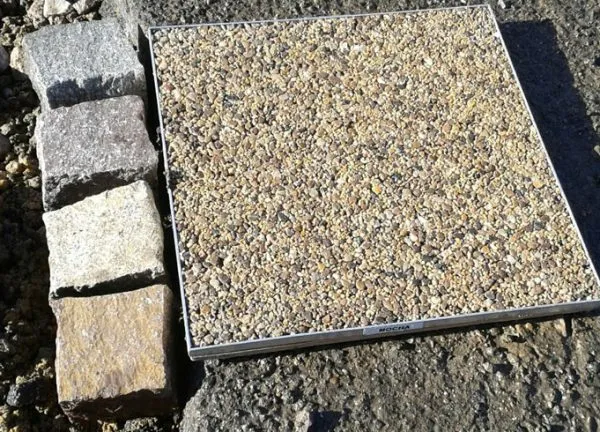
Where can resin bound paving be used?
Resin bound paving can be used for almost any outdoor surface. Each application links to the relevant page.
What are the advantages and disadvantages of resin bound paving?
Resin bound paving has significant advantages over most other surface types. It is fully permeable – no standing water, no run-off. It is smooth and even underfoot – no trip hazards, no loose stones. It requires low maintenance and repairs – no weeds, no joints to repoint, no sections to replace. It is durable and UV stable – the colour holds and the surface performs well for 20 years or more when properly installed.
The honest disadvantages are these: it costs more upfront than block paving or tarmac. It requires a sound, well-prepared base – a poor substrate will cause problems regardless of the surface quality. And it is not a DIY product – the installation process requires specialist equipment and experienced installers. Cut corners at the installation stage and you will not get the result or the longevity. You can find out more about how resin bound is laid here.
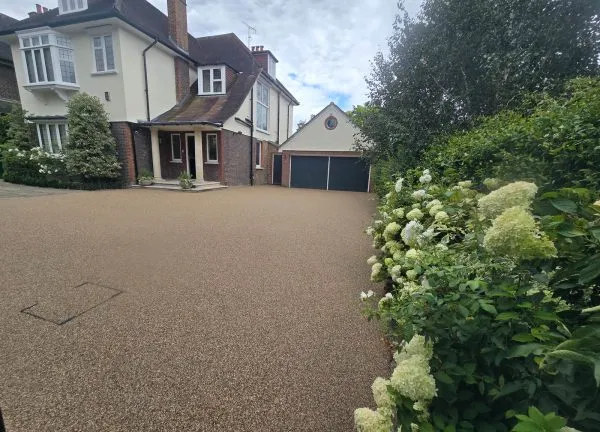
What is resin bound paving?
Resin bound paving is a surface made from natural stone aggregate mixed with a clear UV-stable resin, then hand-trowelled to a smooth finish. The surface is fully porous – water drains through rather than running off – and contains no loose stones. It is used for driveways, patios, paths and pool surrounds.
What is the difference between resin bound and resin bonded paving?
Resin bound paving mixes the stone with resin before laying – the result is a smooth, porous, durable surface. Resin bonded paving scatters loose stone onto a resin-coated base – it is not porous, has a rougher texture and the stones can loosen over time. They are very different products despite the similar names.
What are the disadvantages of resin bound driveways?
The main disadvantages are cost and installation quality. Resin bound paving costs more upfront than block paving or tarmac, and it requires a properly prepared base and experienced installers – a poor installation will not perform or last. Chosen well and installed correctly, those are the only significant drawbacks.
How long does resin bound paving last?
A resin bound surface installed on a sound base and maintained properly will typically last 20 years or more. The UV-stable resin means the colour does not fade in sunlight. Low maintenance is one of the key advantages – an occasional clean is usually all that is needed.
Is resin bound paving suitable for all properties?
Yes. Resin bound paving is used on period properties, contemporary homes, listed buildings and commercial sites. English Heritage and the National Trust have approved resin bound systems for use at historic sites. The wide range of natural stone colours means it can be matched to almost any property style or material.
Ready to explore what resin bound could do for your property?
Browse our application pages or get in touch and we’ll talk you through the options.