Resin bound paths and entrances
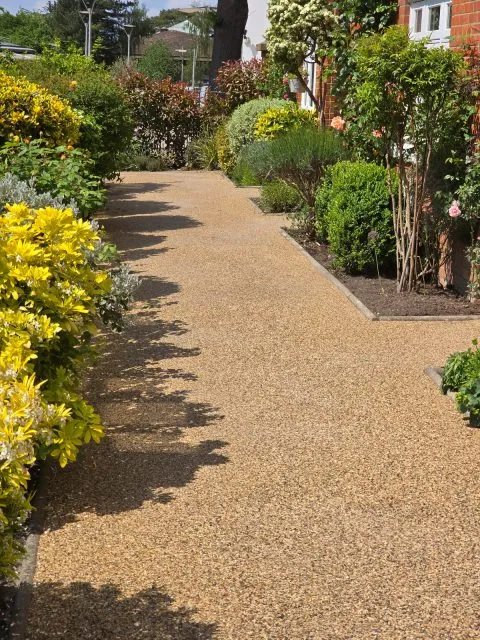
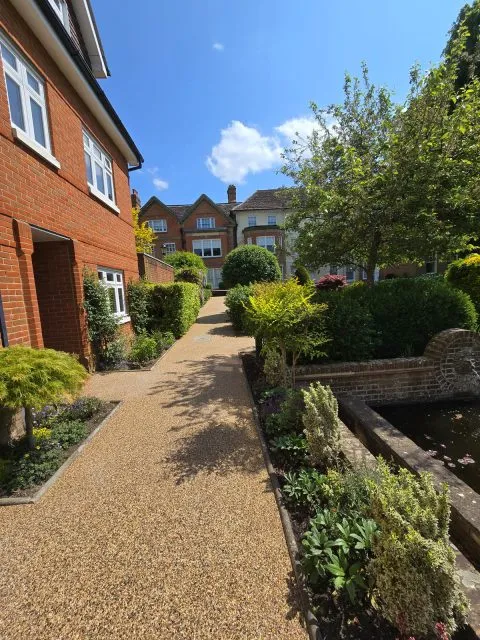
A path does more than connect two points. It sets the tone for a property from the moment someone arrives, and it has to perform reliably through every season. Resin bound paths are smooth underfoot, fully permeable and require very little upkeep. There are no loose stones to scatter, no joints for weeds to establish in and no surfaces that shift or become uneven over time.
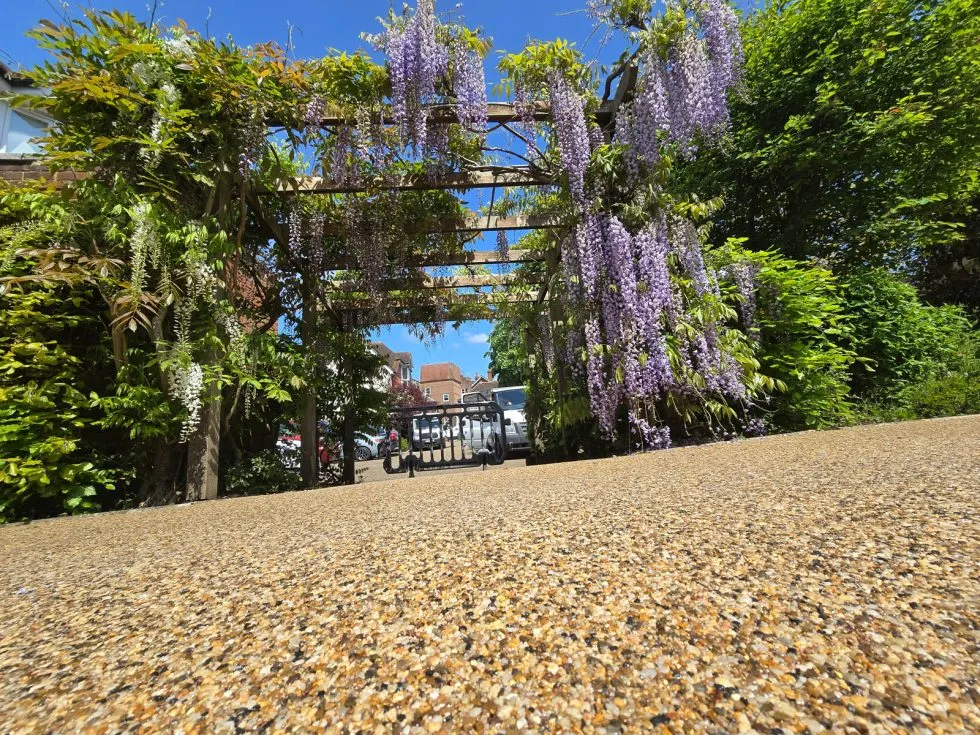
Trusted by homeowners across Sussex, Surrey and London




The practical case for resin bound paths
Resin bound paths address most of the practical shortcomings of other surface types. Unlike block paving or slab paths, there are no joints for weeds to grow through and no individual pieces to lift, crack or settle unevenly. Unlike gravel, the surface is permanently bound – nothing moves underfoot and nothing migrates onto the lawn or into the house.
Because the surface is fully porous, rainwater drains straight through rather than running off the edge. This makes resin bound paths SuDS compliant, which is relevant for front entrance paths where planning guidance on permeable surfaces may apply.
The smooth, even finish also makes resin paths accessible for wheelchairs, mobility aids and pushchairs – a consideration worth building in from the outset.
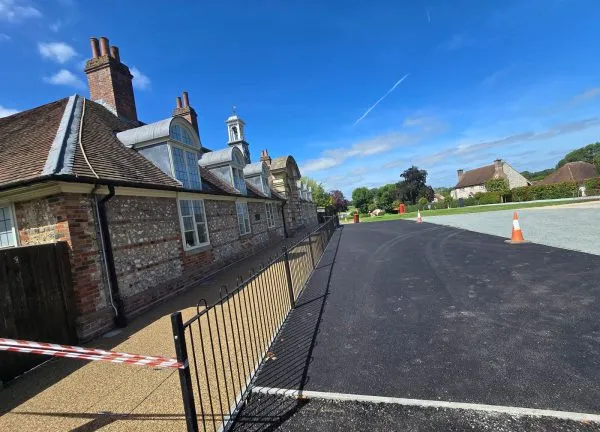
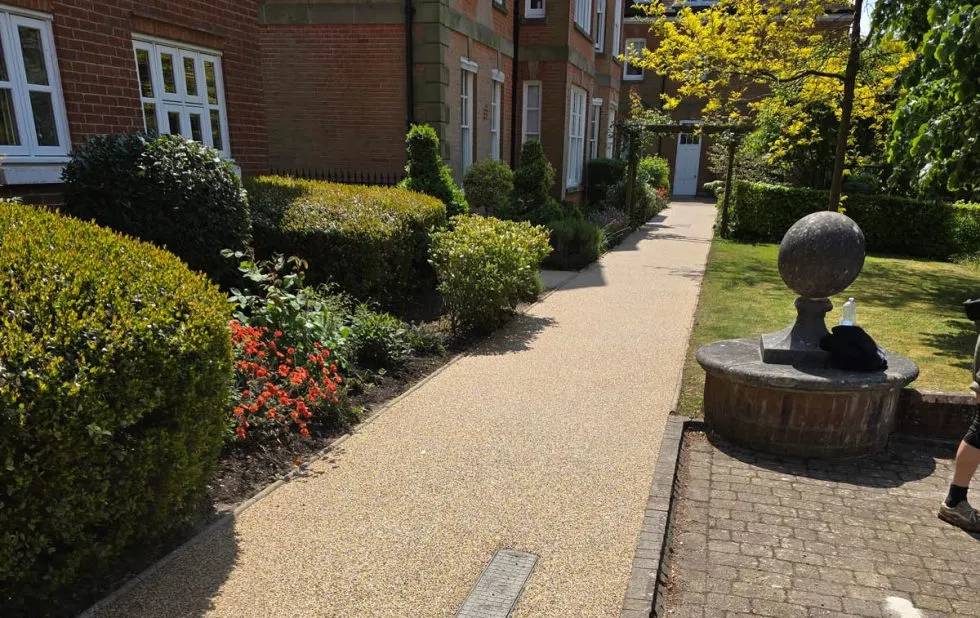
Part of a wider property scheme
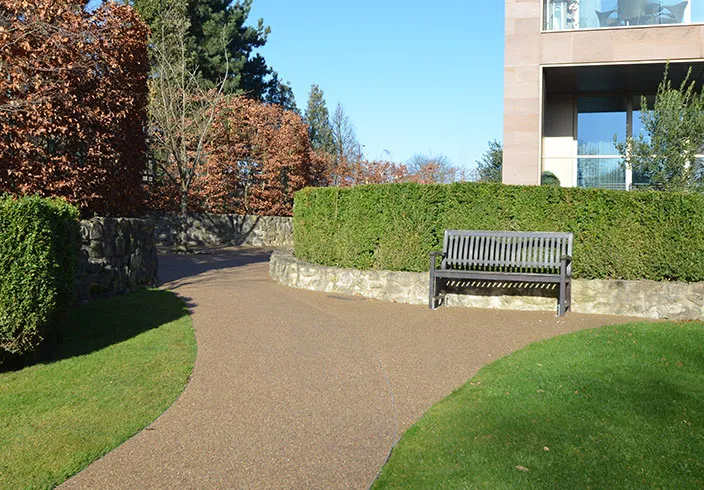
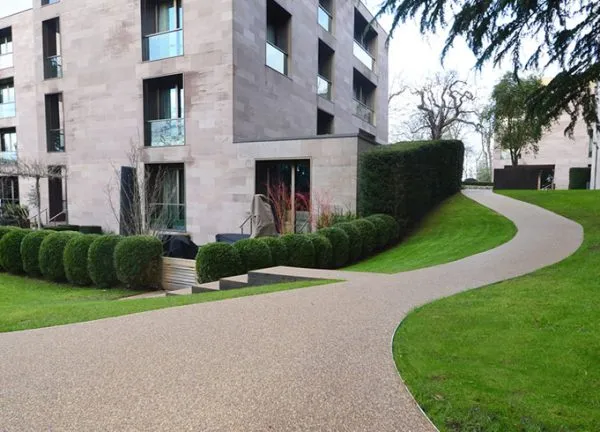
On larger properties, paths in resin often do much more than provide a route from A to B. A single material can carry all the way around the house – from the front entrance, along the side of the property, into the garden and through to other features: a terrace, a pool surround, an outbuilding or a garden studio.
Using one consistent surface throughout creates a sense of intention and coherence across the whole property. It is one of the reasons resin is a popular choice with landscape and garden designers, who often specify it as the connective tissue between different areas of a scheme.
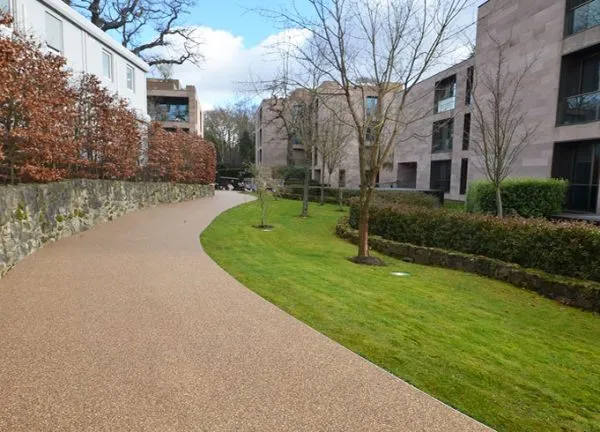
Do resin bound paths require planning permission?
In most cases, no. Resin bound paving is fully permeable, which means it meets the requirements for front garden surfaces under permitted development rules. If your property is in a conservation area or is listed, different rules may apply. There is more detail on our planning permission page, and we are happy to advise during your site visit.
Can resin paths be laid on an existing concrete or tarmac base?
Often, yes. If the existing base is in sound condition – no significant cracking, crumbling or movement – we can lay the resin directly on top, which can reduce preparation costs. We assess the base during the site visit and will tell you honestly whether it is suitable or whether preparation work is needed first.
Do resin paths need a border or edging?
In most cases, yes. Edging retains the resin, gives a clean finished edge and helps maintain the shape of the path over time. We offer various edging options – including metal, stone or brick – and will recommend what suits the property and the surrounding materials.
Ready to improve your path or entrance?
Whatever you need a space to do, we make it happen. Talk to us about how we can create a space that works for you.