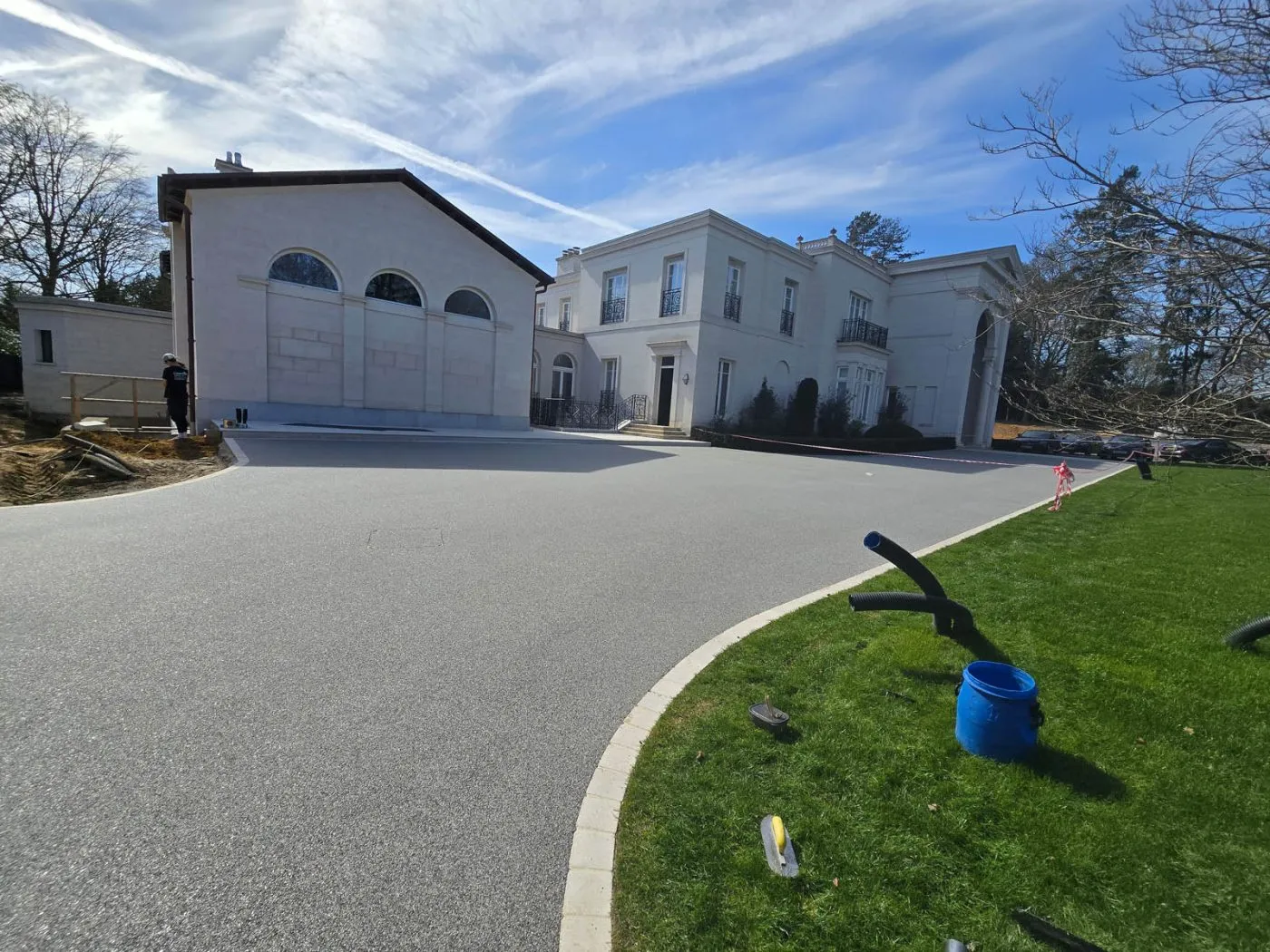
How is resin bound paving laid?
A resin bound surface is only as good as what is underneath it. Getting the base right is the most important part of any installation – and it is where corners are most often cut by less experienced installers. This page explains what a good base looks like, what will and will not work, and what the full installation process involves from preparation through to a finished surface.
What sub-base does resin bound paving need?
The base beneath a resin bound surface must be stable, sound and appropriate for the permeability requirement. There are two scenarios.
For a fully permeable surface – which is what most front driveways require to meet planning guidance – a new porous base is needed. This is typically MOT Type 3 or a porous asphalt laid over a compacted sub-base. It cannot be laid onto existing non-porous concrete or tarmac, as the permeability would be blocked at the base level.
For a non-permeable surface – rear driveways, patios or areas not subject to front driveway planning rules – existing tarmac or concrete in good condition can be used as a base. This often reduces cost and groundworks time considerably.
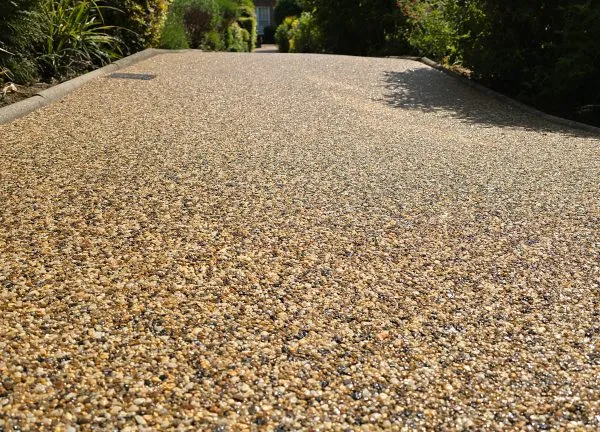
What bases are not suitable for resin bound paving?
Several existing surface types are not suitable as a base and will require removal and replacement before resin can be laid.
Block paving does not provide the stability needed – even minor movement in individual blocks will cause the resin surface above to crack. Cracked or crumbling concrete and tarmac must be broken out and replaced – the resin will not bridge or hide underlying movement, and a failing base will cause the surface above to fail too. Patchy repairs, mixed sections and areas with tree root interference all need to be addressed before installation begins.
Nearby trees are worth noting specifically. Roots that extend beneath a driveway can cause heave over time, cracking any surface laid above them. We assess this during the site visit.
How is the resin bound surface actually installed?
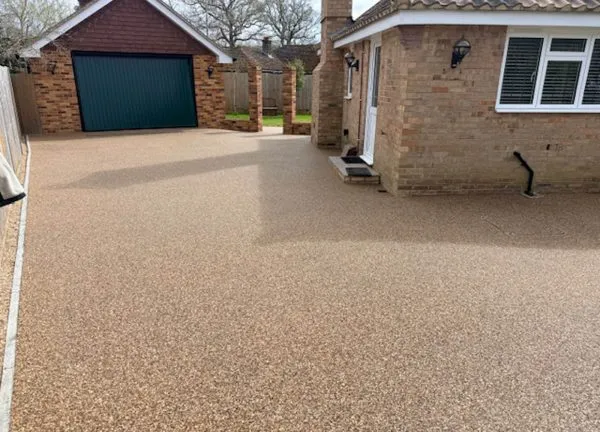
Once the base is confirmed as sound, installation follows a defined process. The natural stone aggregate and UV-stable polyurethane resin are combined in a force-action mixer on site. This ensures every stone particle is fully coated before the mixture is poured.
The mixture is then hand-trowelled across the prepared surface to an even depth – typically 15mm for patios, paths and pool surrounds, and 18mm for driveways and car parks. The trowelling process requires skill and experience to achieve a smooth, consistent finish without variation in depth or texture across the surface.
The surface begins to cure quickly. In normal UK weather conditions it is typically firm enough to walk on within a few hours, and ready for vehicle use within 24 hours, though this varies with temperature and humidity.
What should I expect during a resin bound installation?
Most residential resin bound installations take one to two days, depending on the size of the area and whether groundworks are required. We manage the full programme – groundworks and base preparation first, then the resin installation once the base is ready and cured.
Our team will agree an access plan with you before the job starts and make sure the site is clean and tidy when we leave. We aim to cause as little disruption as possible – particularly important for front driveways where access to the property needs to be maintained.
Once the surface is laid, we will walk you through the result, confirm the curing process and leave you with a maintenance guide.
How thick should resin bound paving be?
Resin bound paving is typically laid at 15mm depth for patios, footpaths and pool surrounds, and 18mm for driveways and car parks. The correct depth depends on the application and the expected loading. We confirm the right specification for each project during the site visit and survey.
Can resin bound paving be laid on existing concrete?
Yes, in some cases. If the concrete is sound – no cracking, crumbling or movement – it can be used as a base for a non-permeable resin bound surface. However, if you need a fully permeable surface (required for most front driveways under planning guidance), a porous base is needed and existing solid concrete must be removed. We assess this during the site visit.
How long does resin bound paving take to install?
Most residential installations take one to two days. The timeline depends on the size of the area, whether new groundworks or a base replacement is needed, and weather conditions. We agree the programme with you before the job starts and will give you a clear day-by-day plan.
How long before I can use my new resin bound driveway?
The surface is typically firm enough to walk on within a few hours of laying, and ready for vehicle use within 24 hours in normal UK weather conditions. Colder temperatures can extend curing time slightly. We confirm the specific timings for your installation on the day.
Do I need to do anything to prepare before installation day?
We will agree an access plan with you before the job begins. Typically we ask that the area is clear of vehicles and that access to the site is available from the agreed start time. We handle all preparation, groundworks and installation ourselves – you do not need to do anything beyond that.
Ready to discuss your installation?
Get in touch and one of our team will visit to assess the site and give you an accurate quote.