Planning permission & resin bound driveways
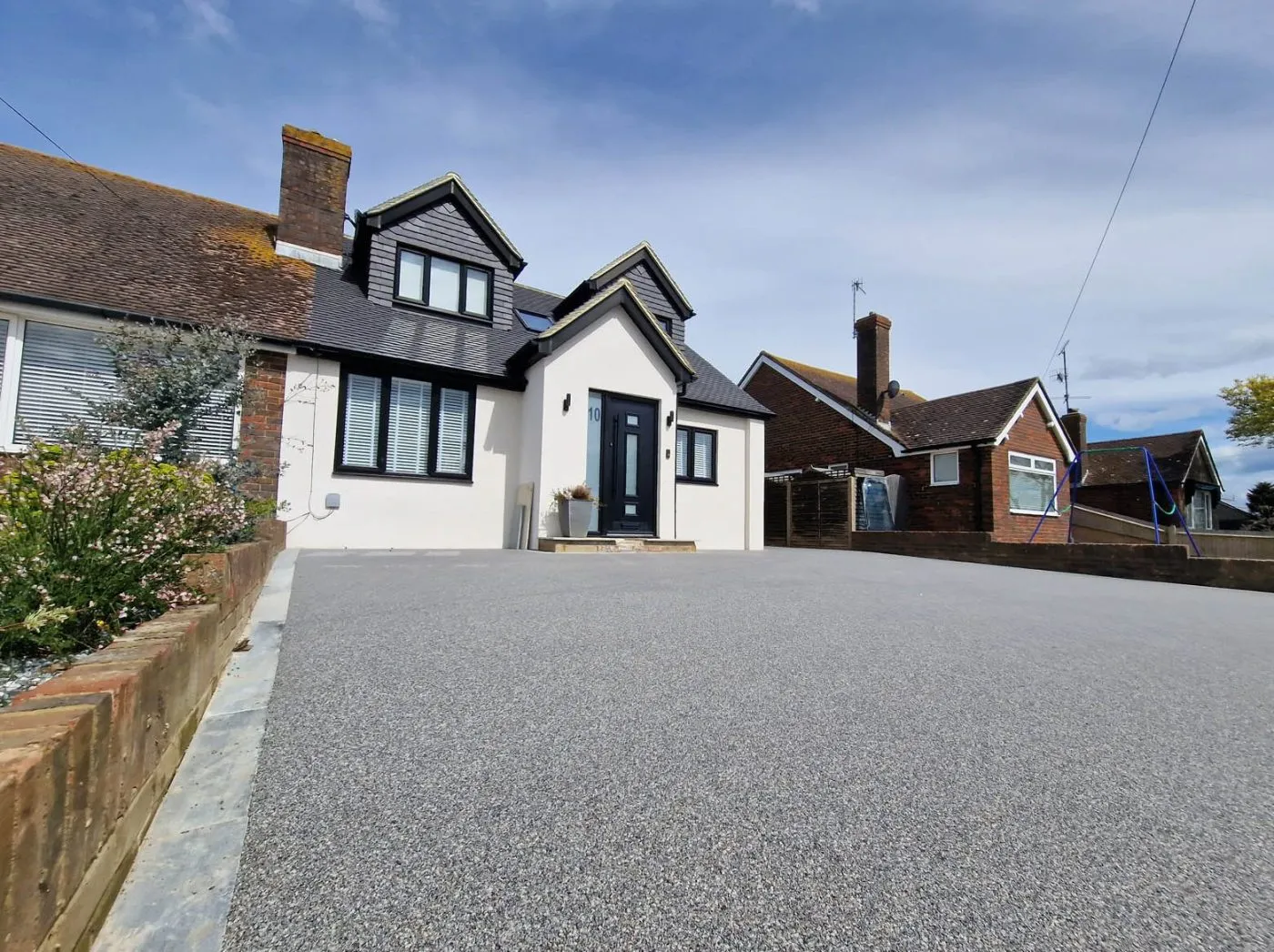
For most homeowners, the answer is straightforward: you do not need planning permission to replace or install a resin bound driveway. Because resin bound paving is a permeable surface, it satisfies the permitted development rules that apply to front driveway surfaces in England. There are exceptions – some commercial projects, conservation areas and listed buildings have different requirements – but for the majority of standard residential properties, planning permission is not required.
Do I need planning permission for a resin bound driveway?
Under permitted development rights in England, you do not need planning permission to surface or resurface a front driveway using a permeable material. Resin bound paving is a permeable surface – water drains through it rather than running off across the top – which means it falls within these permitted development criteria.
By contrast, replacing a front driveway with an impermeable surface – standard concrete or tarmac – does require planning permission, unless the run-off is directed to a lawn, border or other permeable area.
The Environment Agency publishes guidance on the permeable surfacing of front gardens, which sets out the rules in full. We are happy to talk you through what applies to your specific property if you are unsure.
Do conservation areas or listed buildings change the rules?
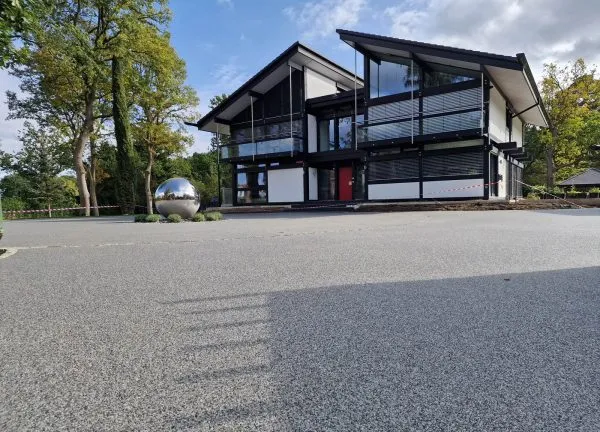
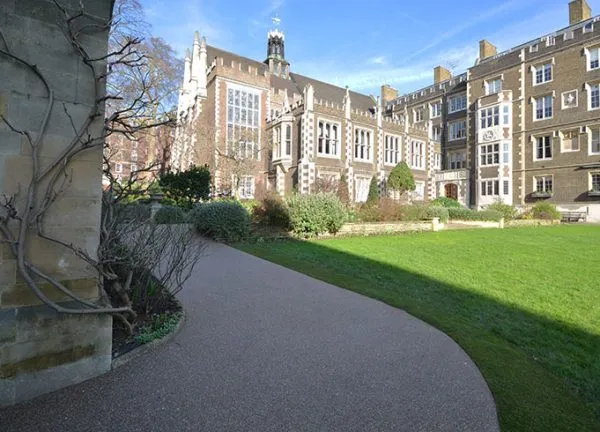
Yes. If your property is in a conservation area, an Area of Outstanding Natural Beauty, a World Heritage Site or is a listed building, permitted development rights may be restricted or removed. In these cases, you may need to apply for planning permission or listed building consent before any driveway work proceeds, even if you are using a permeable surface.
This does not mean the work cannot go ahead – resin bound paving has been used successfully at many listed and heritage properties, and English Heritage has approved resin bound systems for use at historic sites. It simply means the process may involve an application and approval before installation begins.
If your property falls into any of these categories, contact your local planning authority for guidance before proceeding. We can also advise based on our experience with heritage properties.
Do patios, rear driveways and garden paths need planning permission?
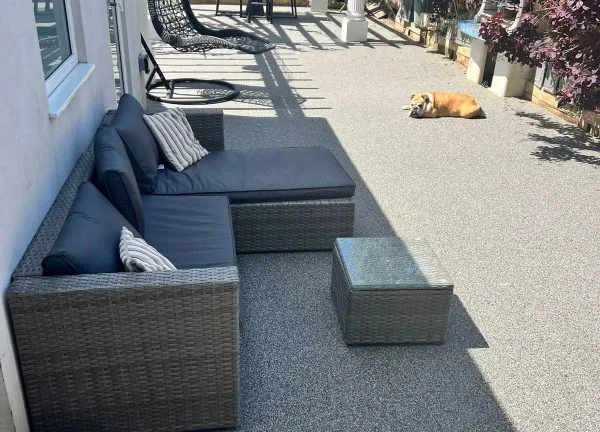
The permitted development rules on permeable surfacing apply specifically to front driveways – the area between the house and the public highway. Patios, terraces, rear driveways and garden paths are generally not subject to the same rules and can normally be installed without planning permission, regardless of whether the surface is permeable or not.
As always, if your property has specific constraints – listed building status, a restrictive planning condition, or if you are in any doubt – it is worth confirming with your local planning authority before work begins. We can advise on the practicalities and direct you to the right sources of guidance.
Do I need planning permission for a resin bound driveway?
In most cases, no. Resin bound paving is a permeable surface, which means it satisfies the permitted development rules for front driveways in England. Planning permission is not required for a permeable front resin bound driveway. However, if your property is in a conservation area, is listed or has specific planning conditions, different rules may apply – check with your local planning authority if you are unsure.
Does planning permission apply to resin driveways in conservation areas?
Yes. Permitted development rights are often restricted in conservation areas, and you may need planning permission before installing a new driveway even if using a permeable surface. The requirements vary by area – contact your local planning authority to confirm what applies to your specific property. We have experience working with properties in conservation areas and can advise on the process.
Is resin bound paving allowed on listed buildings?
Resin bound paving can be used at listed buildings – it has been approved for use at historic properties and National Trust sites. However, listed building consent may be required before any work proceeds, in addition to any planning permission requirements. Contact your local planning authority or Historic England for guidance specific to your property.
Do I need planning permission for a resin patio or garden path?
Generally, no. The permitted development rules on permeable surfacing apply to front driveways specifically. Patios, rear garden surfaces and garden paths are usually not subject to the same requirements and can be installed without planning permission. If your property has specific constraints, it is worth checking with your local planning authority first.
What is the difference between permeable and impermeable surfaces for planning purposes?
A permeable surface allows rainwater to drain through it into the ground. Resin bound paving, gravel and certain block paving systems are permeable. Standard concrete and tarmac are impermeable – water runs off the surface. Under planning rules, a new or replacement front driveway using an impermeable surface requires planning permission. A permeable surface does not, in most cases. This is one of the key practical advantages of resin bound paving for front driveways.
Not sure whether your property needs planning permission?
Get in touch and we’ll talk you through what usually applies – and point you to the right sources if your situation is more complex.