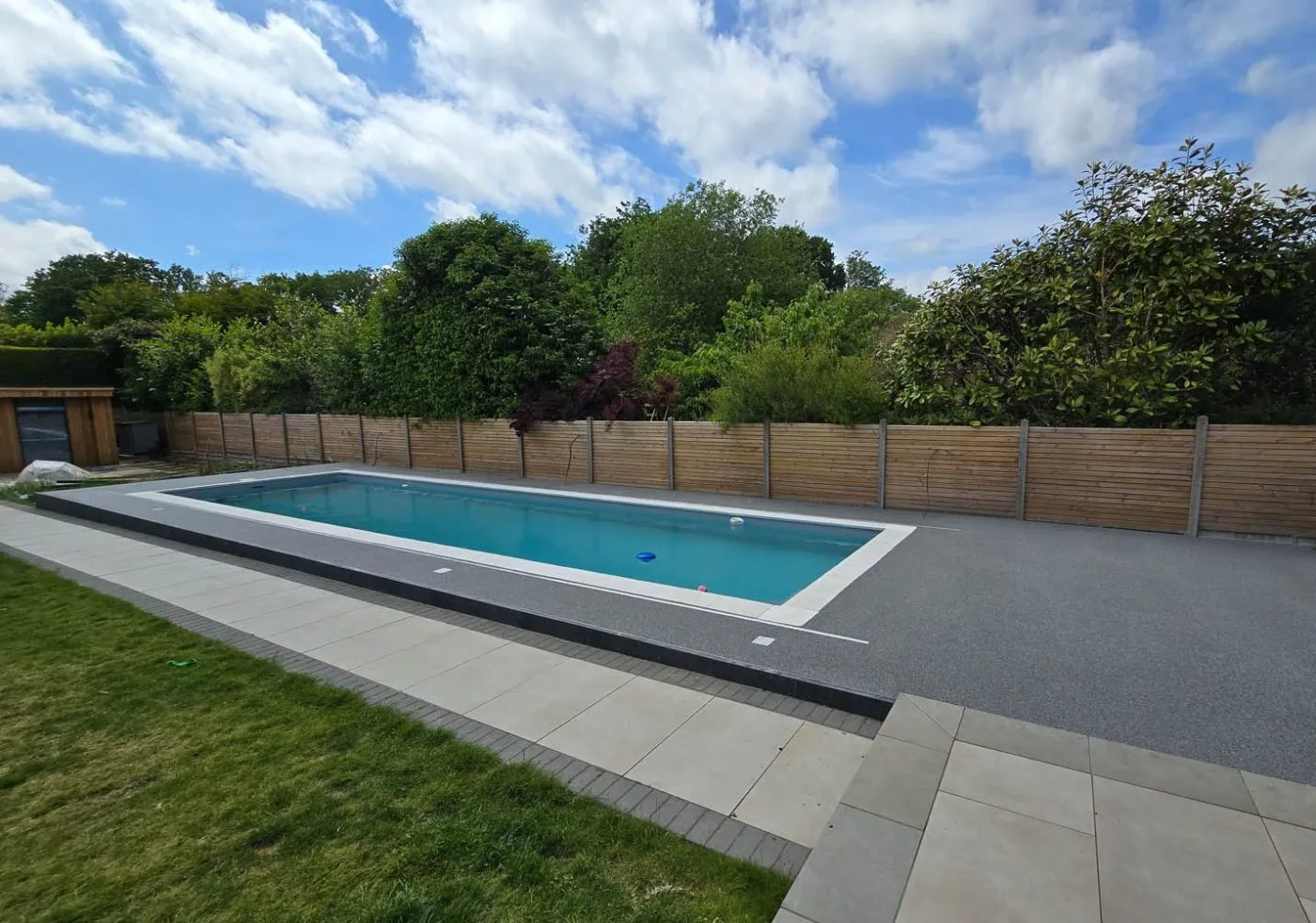
Why choose permeable resin bound paving?
Permeable paving allows rainwater to drain through the surface and into the ground below, rather than running off across the top. For homeowners, this matters in three practical ways: it reduces the risk of flooding and pooling water around the property, it meets the planning requirements that apply to most front driveway surfaces, and it supports the health of nearby trees and planting by allowing groundwater to replenish naturally.
Why does permeable paving matter for residential properties?
The UK has seen a significant increase in flash flooding and urban surface water run-off over recent decades. A large part of this is driven by the replacement of gardens and front drives with impermeable surfaces – concrete, tarmac and block paving – which prevent water from soaking into the ground and instead funnel it into already-stressed drainage systems.
When a front driveway is replaced with a permeable surface, rainwater drains through at the point where it falls. There is no run-off across neighbouring pavements, no pooling near boundaries and no additional pressure on street drainage. For a single property, the impact is modest. Across a street, a neighbourhood or a town, it adds up considerably.
This is why planning guidance now requires most new or replacement front driveway surfaces to be permeable – and why resin bound paving is one of the surfaces that satisfies that requirement without needing planning permission in most cases.
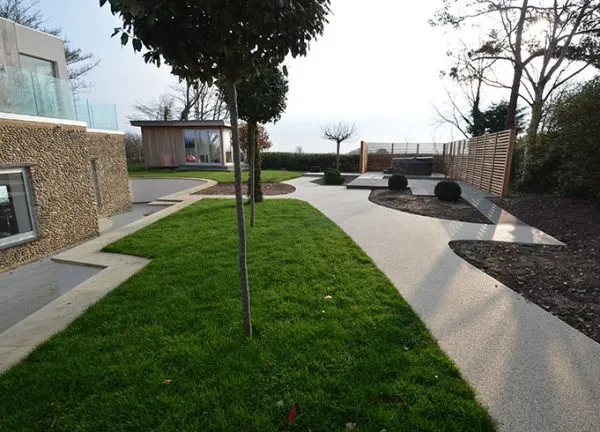
How does a permeable resin bound surface drain?
A resin bound surface is permeable because the stones are packed together with resin coating each particle, but the gaps between the stones remain open. Water passes through these gaps and into the sub-base beneath – which is typically a porous or open-graded aggregate that allows it to filter down into the ground.
The surface itself drains at a rate that handles normal UK rainfall without pooling. After heavy rain, a well-installed resin bound surface will look dry within minutes. This contrasts with solid concrete or standard tarmac, where water sits on the surface until it either evaporates or runs off to the nearest drain.
What are the environmental benefits of permeable paving?
Beyond flood prevention, permeable paving has several environmental benefits that are worth understanding. Rainwater filtered through a permeable surface is cleaned naturally as it passes through the sub-base, reducing the volume of pollutants entering watercourses compared with run-off from solid surfaces.
For properties with established trees in or near the driveway, permeability is also important for tree health. Tree roots need access to groundwater – an impermeable surface can stress or damage established trees over time by cutting off their natural water supply. A permeable surface maintains that connection.
For homeowners who want a low-impact, ecologically sound choice for their property, resin bound paving is one of the most straightforward options available.
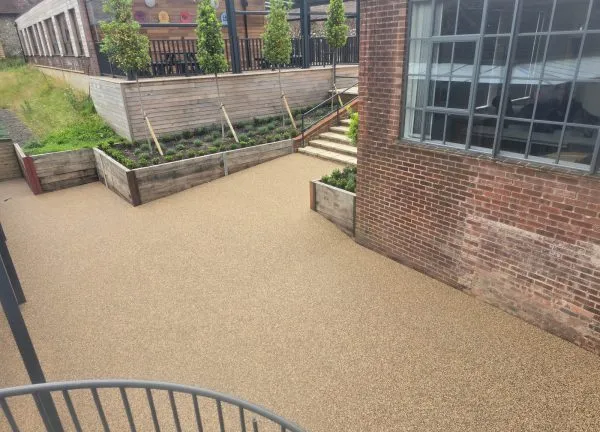
Does permeable paving affect planning permission?
Yes – and it works in your favour. Under permitted development rules, replacing or creating a new front driveway surface with a permeable material does not require planning permission in most cases. Using an impermeable surface – concrete or standard tarmac – typically does.
Resin bound paving is permeable, which means it falls within the permitted development criteria and planning permission is not usually required. This is one of the reasons it has become a popular choice for front driveways, particularly in areas where kerb appeal matters and the process needs to be straightforward.

Are resin bound driveways permeable?
Yes. Resin bound paving is fully permeable. The resin coats each stone particle but leaves the gaps between stones open, allowing water to drain through the surface and into the sub-base below. This is what makes it SuDS compliant and suitable for front resin bound driveways under permitted development rules without requiring planning permission in most cases.
What is a permeable driveway surface?
A permeable driveway surface allows rainwater to drain through it rather than running off across the top. Resin bound paving, gravel and certain block paving systems are permeable. Standard concrete and tarmac are not. Under UK planning rules, front driveways must use a permeable surface (or direct run-off to a lawn or border) to avoid needing planning permission.
Is resin bound paving good for the environment?
Yes. Permeable resin bound paving reduces surface water run-off, which lowers the risk of localised flooding and reduces pressure on drainage systems. Water filtered through the surface and sub-base is also naturally cleaned before entering the ground, reducing pollutant run-off. For properties with nearby trees, permeability supports tree health by maintaining groundwater access.
Does resin bound paving help prevent flooding?
It contributes to flood prevention at a local level. Because rainwater drains through the surface rather than running off, there is less surface water travelling across pavements and into drainage systems. A single driveway makes a modest difference, but the cumulative impact across a neighbourhood – particularly where impermeable surfaces have replaced gardens – is meaningful.
Does permeable paving require planning permission?
No – using a permeable surface for a front driveway does not require planning permission under permitted development rules in most cases. This is one of the key advantages of resin bound paving over impermeable alternatives like concrete or standard tarmac, which do typically require permission for new or replacement front driveways. There are exceptions – conservation areas and listed buildings may have different requirements.
Want to know more about planning permission for resin bound paving?
Read our planning permission guide or get in touch and we’ll talk you through what applies to your property.